Early closes, auctions and order validity need dated sources
A same-day cutoff calculation is not a universal session calendar, auction instruction or guaranteed completed exit.
A venue can have several session objects
A core session, auction and extended-hours window may have different effective rules and selected instrument scope. The official NYSE calendar gives named dates and product exceptions for its own venue. It is not a calendar for every asset or broker. A genuine study stores venue, product, session date and effective source before defining an entry or exit boundary. The legacy clock accepts manually entered same-day close and buffer only. This edition does not fetch that schedule or claim that a chart's last bar automatically supplies the account's valid order deadline.
Instruction validity is another source
An order's type, validity and cancellation restrictions belong to its actual selected contract. A planned pre-close buffer does not guarantee that an order will execute at that time or that the same instruction is eligible in an auction. Preserve original request and acknowledged state separately from unique fills. The worksheet records no authentic venue or account event. It also does not choose a native exit or change whole-position policy. Public documentation supports scoped mechanism questions, not a universal operational assurance or a completed historical execution record.
Test exceptions without altering the first case
A shortened session needs its own dated calendar source and a separately labelled fixture. Do not overwrite the standard-session example after seeing a favourable outcome. Same-day entered clock comparisons reject unsupported cross-midnight inputs instead of guessing a date. Actual timezone conversion and clock synchronisation remain separate evidence requirements. The added time-budget card classifies an authored holding requirement, not a real calendar. Its failed or unresolved branch does not imply a losing trade, broker violation or measured failure rate for any venue.
Keep the completed-exit question
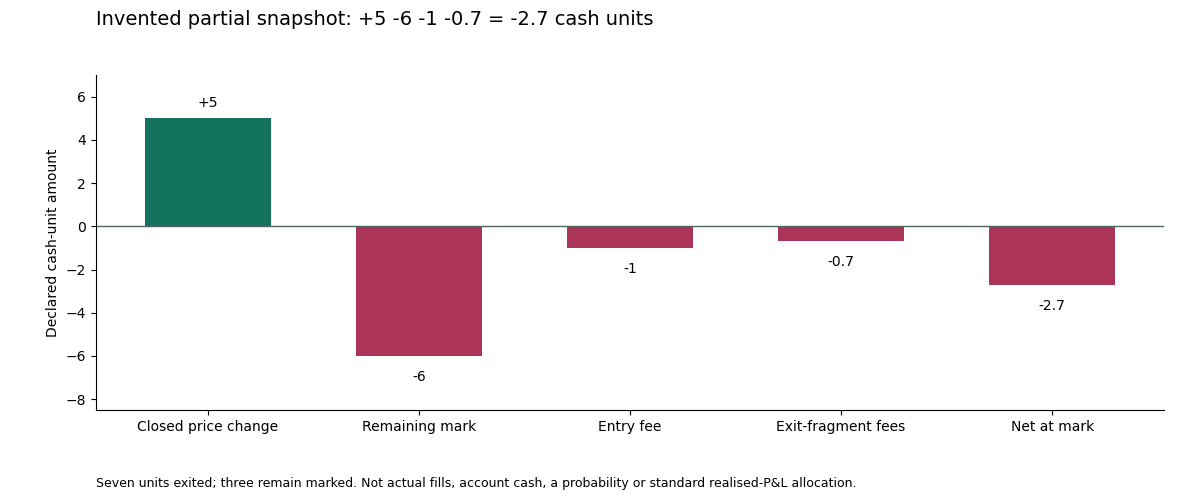
Final filled quantity and time determine a genuine completed position record, not merely prompt submission or cancelled remainder. The amount lens can keep unclosed units at an assumed mark but cannot certify their eligibility or final fill. Real financial research needs eligible observations, original rule and independent master; real production needs managed-cloud ownership and durable account evidence. Neither is provided by a static clock. The fictional table below distinguishes declared boundaries and missing order rules without asserting a current market schedule, personally accessible trading or an independently tested execution service.
Fictional short-horizon evidence case
A fictional session declares close 16:00 and buffer fifteen minutes, giving 15:45 cutoff. Another separately authored session declares close 13:00, giving 12:45. Neither fixture is tied to an actual date or venue. Order validity, request state and final fill remain absent; the earlier clock alone cannot certify a completed exit.
| Object | Record | Bounded finding |
|---|---|---|
| Standard fixture | 15:45 declared cutoff | No actual venue date |
| Short fixture | 12:45 declared cutoff | Separate assumption |
| Order validity | Source absent | No execution guarantee |
Primary references and scope
Source review: 14 October 2026. Official mechanism descriptions are not this desk's paid-account test, independently captured fills or vendor-return audit.